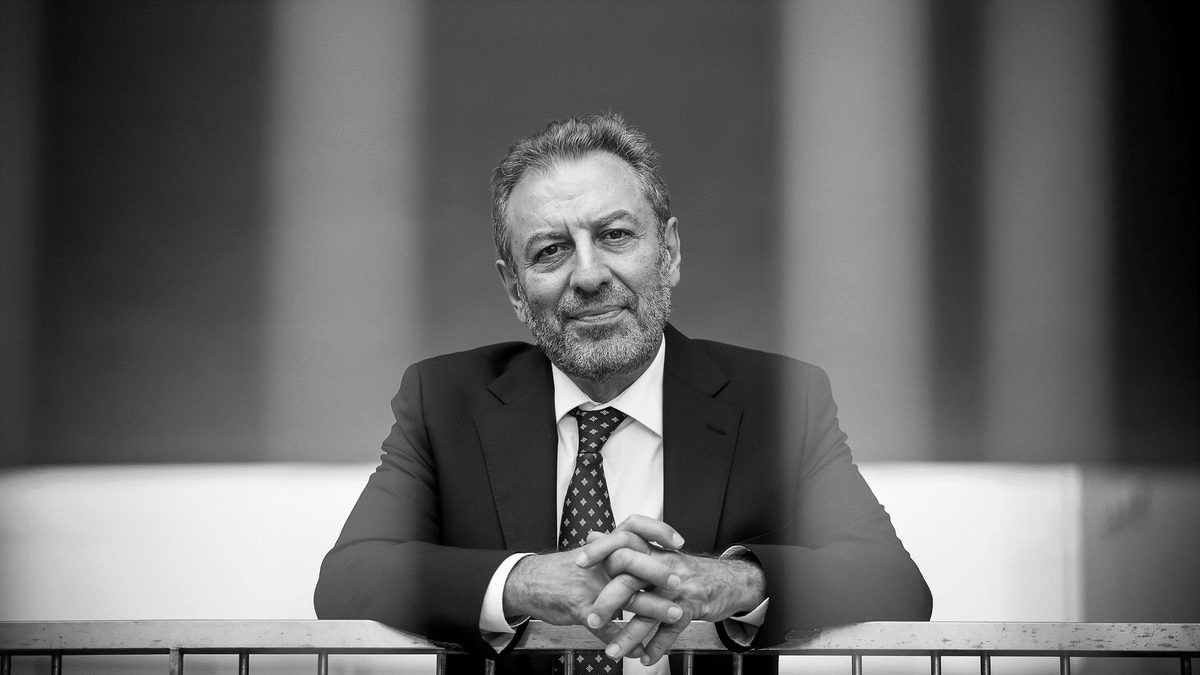
Nuno Crato is a Research Professor of Mathematics and Statistics at CEMAPRE/ISEG, University of Lisbon, a member of the French government's Scientific Council for National Education (CSEN), founding organiser of Lisbon Economics and Statistics of Education (LESE), and a visiting senior research scientist at the European Commission's Joint Research Centre.
His research covers stochastic models, time-series applications to physical, financial, and social problems, and the statistical, data-based evaluation of public policy, particularly in education. He has published extensively in econometrics and statistics and has worked widely on education policy analysis.
He was president of the Portuguese Mathematical Society (2004–2010), director of the International Institute of Forecasters (2016–2020), and founding president of Iniciativa Educação (2019–2026), an organisation dedicated to fostering student education. In public debates and publications, he has advocated a structured curriculum, external student evaluation, and stronger subject-knowledge preparation for teachers.
From 2011 to 2015, he served as Portugal's Minister of Education and Science. During his term, mandatory schooling was extended from nine to twelve years, English became compulsory from third grade, school dropout fell from approximately 25% to 13.7%, retention rates improved, and Portuguese students achieved their strongest results to that date in international studies including PISA and TIMSS.
A prolific science writer, he is the author of books published in the United States, United Kingdom, Spain, Italy, Brazil, and Portugal, including Figuring It Out (Springer, 2010) and Aprender (FFMS, 2025). His recent collaborative works include Developing Curriculum for Deep Thinking: The Knowledge Revival (Springer, 2025), Improving National Education Systems After COVID-19 (Springer, 2024), Improving a Country's Education (Springer, 2021), and Data-Driven Policy Impact Evaluation (Springer, 2019).
He has advised and spoken to governments and education organisations across Africa, Europe, South America, the Middle East, and Australia. His distinctions include prizes from the European Mathematical Society (2003) and the European Union (2007), as well as the Commander and Grand Cross of the Order of Prince Henry and the Grand Cross of the Order of Public Instruction.
Biographies
Curriculum Vitae
Invitations and contact
For speaking invitations, interviews, media requests and academic collaboration, please write to: